UNM Hospital in Albuquerque
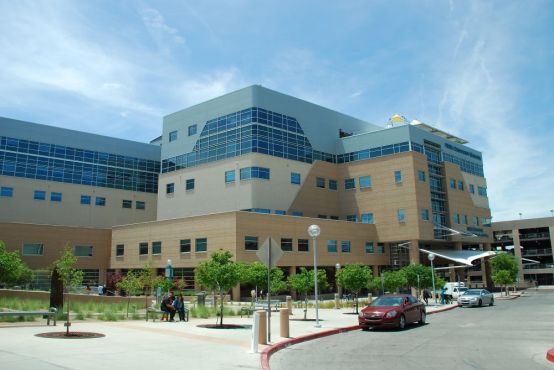
My 18-week (633-hours) Clinical Rotation was with UNM Hospital and the final 6-weeks were taking place as the COVID-19 pandemic was beginning to have a severe impact on Albuquerque. “Stay at home” orders were issued by the Governor of New Mexico along with class cancellations and college closures but I managed to make it to the middle of the 17th week when my internship work at the hospital was suspended. Thankfully, I was able to complete the final 6 days of my rotation from home with conferencing via Zoom, learning modules, case studies and paperwork completed online.
I would like to take a moment to recognize and appreciate the magnitude of the University of New Mexico Hospital. It’s the only Level I Trauma Center in the state and manages more than 93,000 emergency visits, 7,000 trauma cases, 18,000 surgeries, and 491,000 outpatient visits annually. With 556 beds that always seem to be filled, UNMH caters to a large, diverse population with some of the most complex and urgent health care needs. So you could say I’ve seen some things….
My clinical rotation was a whirlwind of new experiences, new patients, and new professional relationships. The saying “you only learn by doing” could never be more true. Although every day was unique and valuable in its own way, I thought it would be beneficial to highlight the main parts of a day in the life of a clinical dietetic intern.
- I started by screening the floors I had for the day, looking for patients who needed a follow-up, had a consult, were NPO or eating poorly, had something “off” in their chart that needed more investigating, and those who required nutrition support.
- After screening, I made a list of patients to see for the day (usually between 4-6 per day for one or two floors) and researched their medical history, diet/intake history, laboratory results, and other pertinent information.
- After doing some preliminary investigative work, I went see the patients. I talked to their team or family to get an external, unbiased view of the patients condition.
- Once I interviewed the patient/family, I went to interdisciplinary rounds to get a summary of all the patients on the floor – this is REALLY helpful because you get to know when patients are leaving, their overall condition and plan of care, and it’s a great time to ask the team questions that would help me develop a nutrition intervention.
- Finally, after gathering all the information needed, I wrote my notes. UNMH has an ADIME template consisting a subjective summary, current diet order, PO intake, I’s and O’s, medical/surgical history, anthropometric measurements, nutrition-focused physical exam, biochemical data, medical tests/procedures, medications, estimated energy and protein needs, PES statement, intervention, overall nutritional goal, and monitoring and evaluation. Depending on the complexity of the patient, one note would take between 30 minutes to 2 hours.
5 Key Takeaways:
- Use all of your resources! Dietitians, books, guidelines, medical team, etc. are there to help you learn. Ask questions, be curious, do your research, and take notes.
- Talk to the team – you will always get important information from them!
- Familiarize yourself with the formulary! UNMH has over 50 nutritional formulas (both adult and pediatric) so it’s definitely beneficial to know what you have available.
- Make sure information is accurate – if something doesn’t seem right, it probably isn’t. Always ask for clarification.
- Documentation! Document who, what, when, how and why something was done.
 Hannah Contrucci, MS, RDN, LD